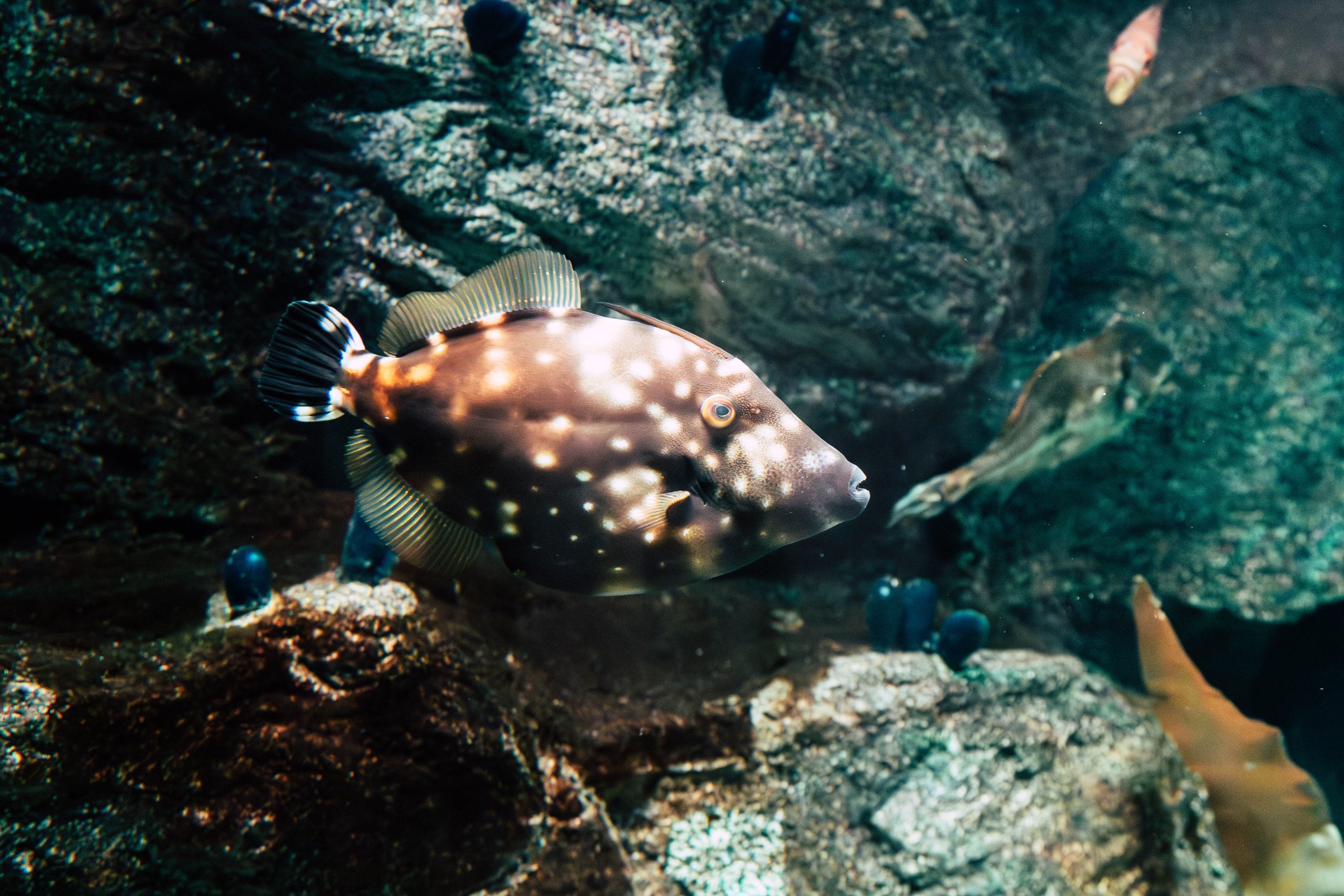
When you visit Save The Bay’s Hamilton Family Aquarium, you embark on a journey through the fascinating and diverse habitats of Narragansett Bay.
Each habitat is home to a unique group of animals and plants that have evolved to survive perfectly under a specific set of conditions. And each habitat faces challenges that we can all help address by working to protect and improve Narragansett Bay.
While the ultimate learning experience can only be found by visiting the Aquarium, you can get a preview by exploring the habitats below.
Rocky Shores
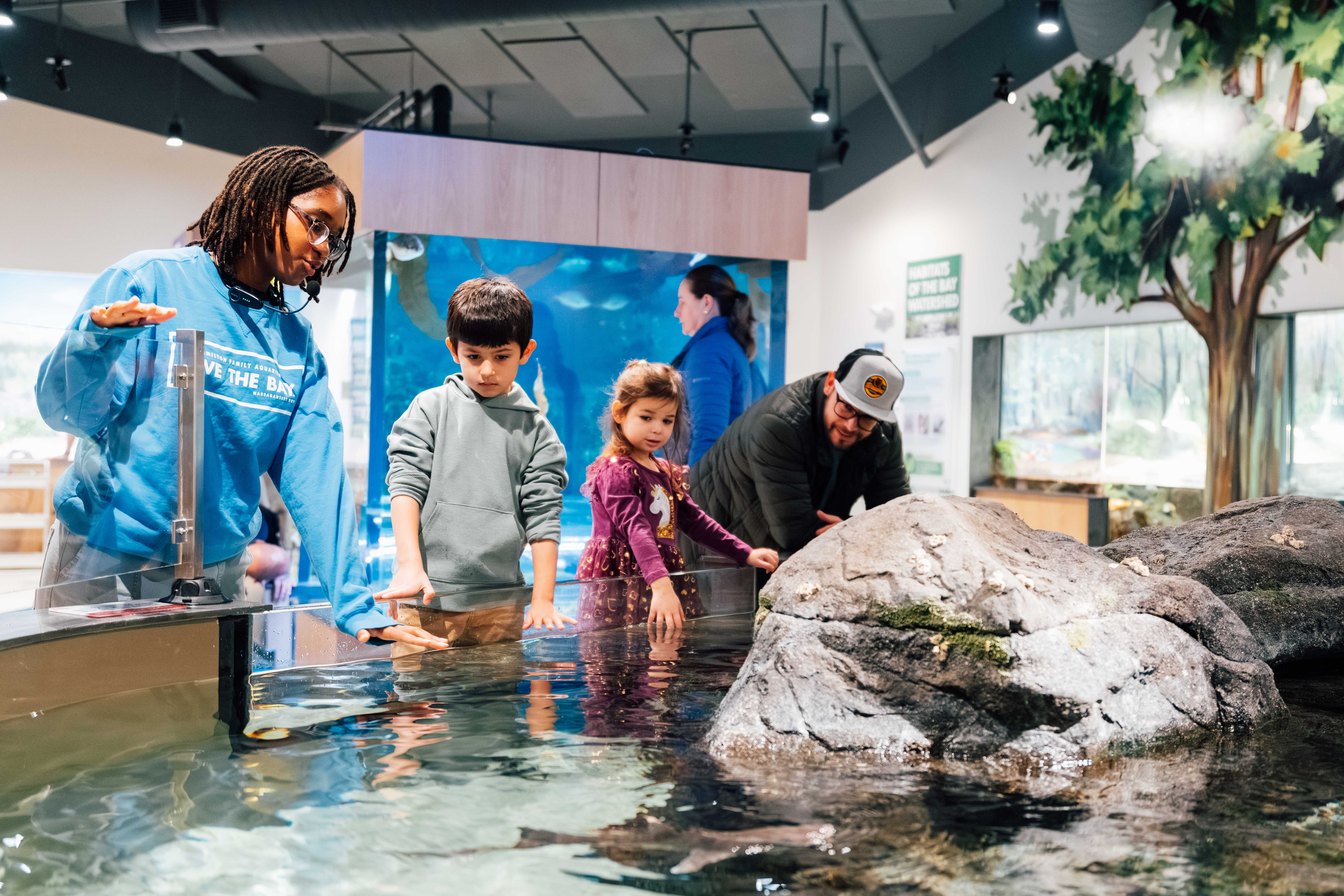
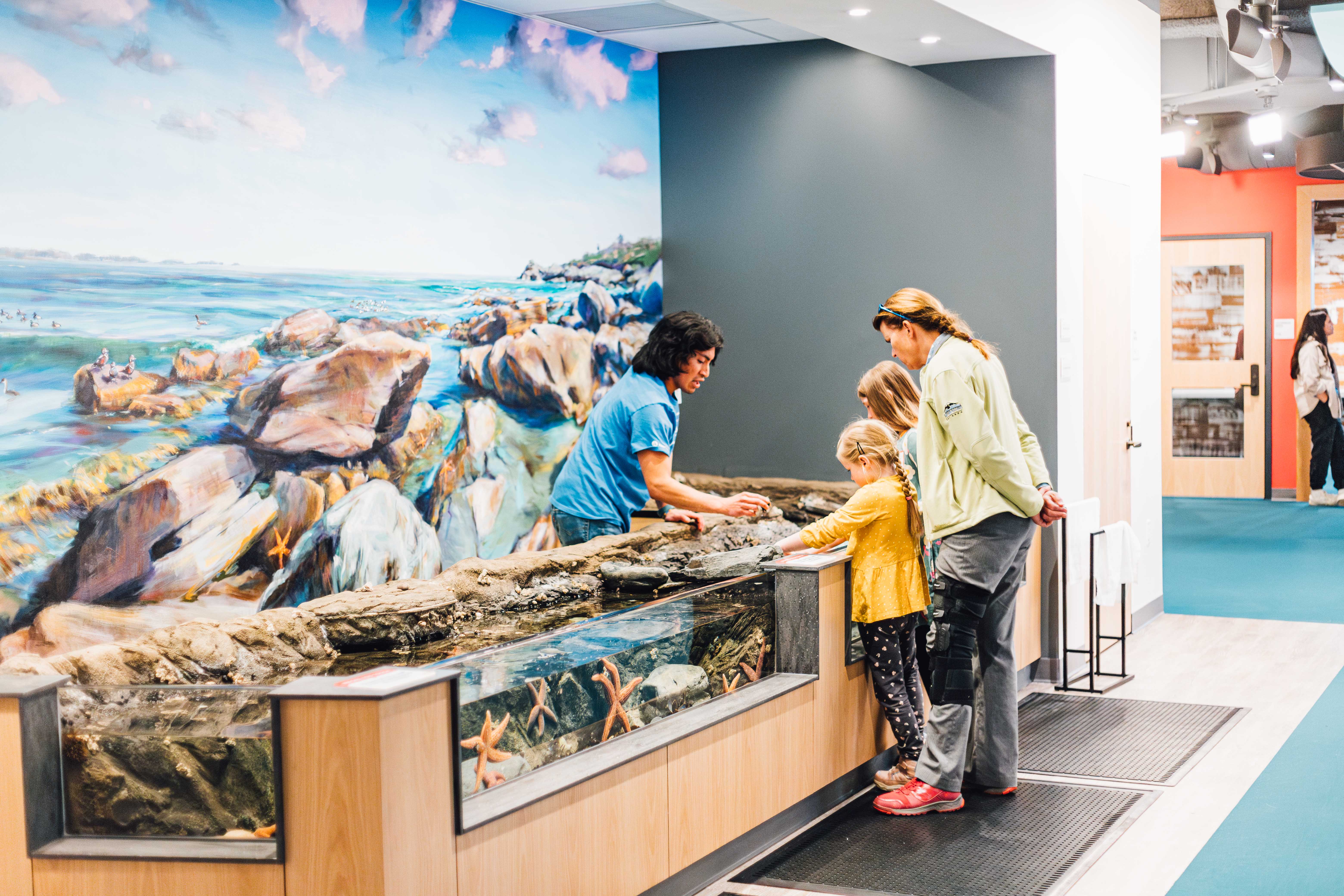
The rocky shoreline is one of the most dynamic habitats in Narragansett Bay—constantly battered by waves, exposed to sun and air at low tide, and home to remarkably tough animals that cling, hide, and burrow to survive.
Sandy Shores
Sandy beaches look empty, but beneath the surface lies a busy world of burrowing worms, clams, and crustaceans. These shifting sands support a surprising variety of life adapted to constantly changing conditions.
Salt Marshes
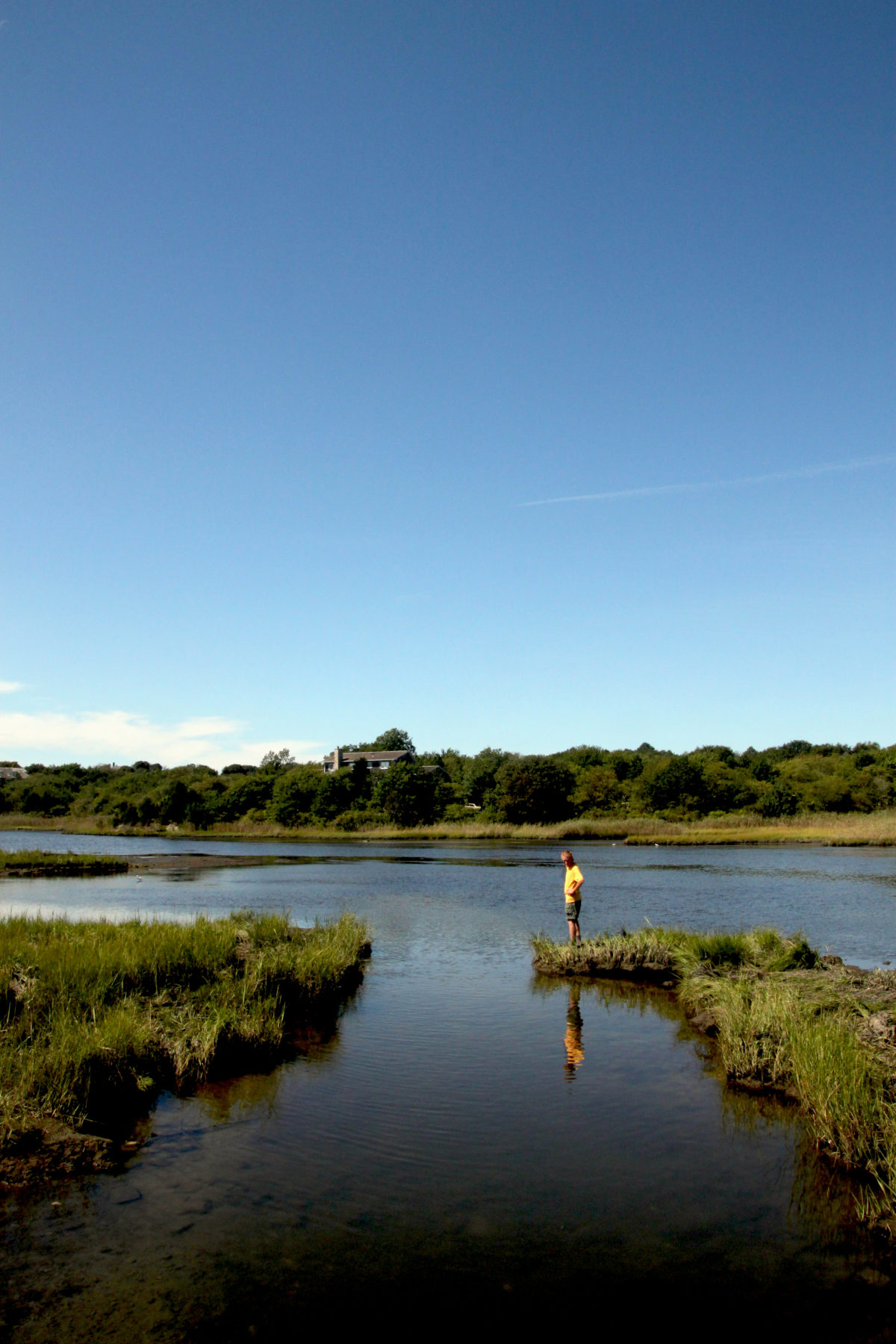
Salt marshes are among the most productive ecosystems on Earth. Serving as nurseries for fish, buffers against storm surge, and filters for polluted runoff, these coastal wetlands are vital to the health of the entire Bay.
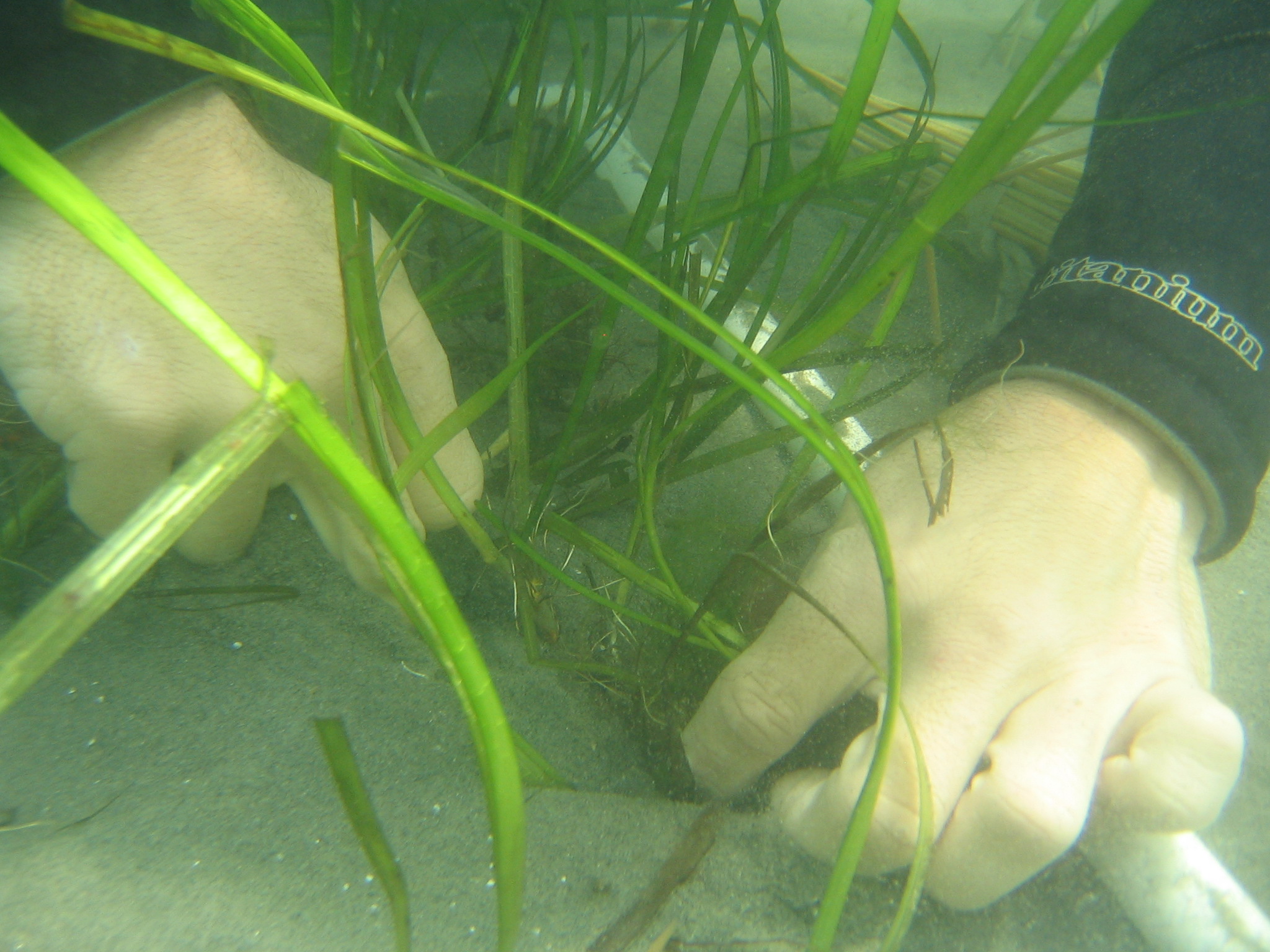
Eelgrass Habitat
Eelgrass meadows are the underwater forests of Narragansett Bay—providing shelter and food for hundreds of species including bay scallops, seahorses, and juvenile fish. Declining water quality has caused significant eelgrass loss, making restoration critical.
Deeper Waters
Below the shallows lies a darker, cooler world where lobsters roam, skates glide along the bottom, and schools of fish navigate by touch and smell. The deeper waters of the Bay hold some of its most elusive and fascinating residents.

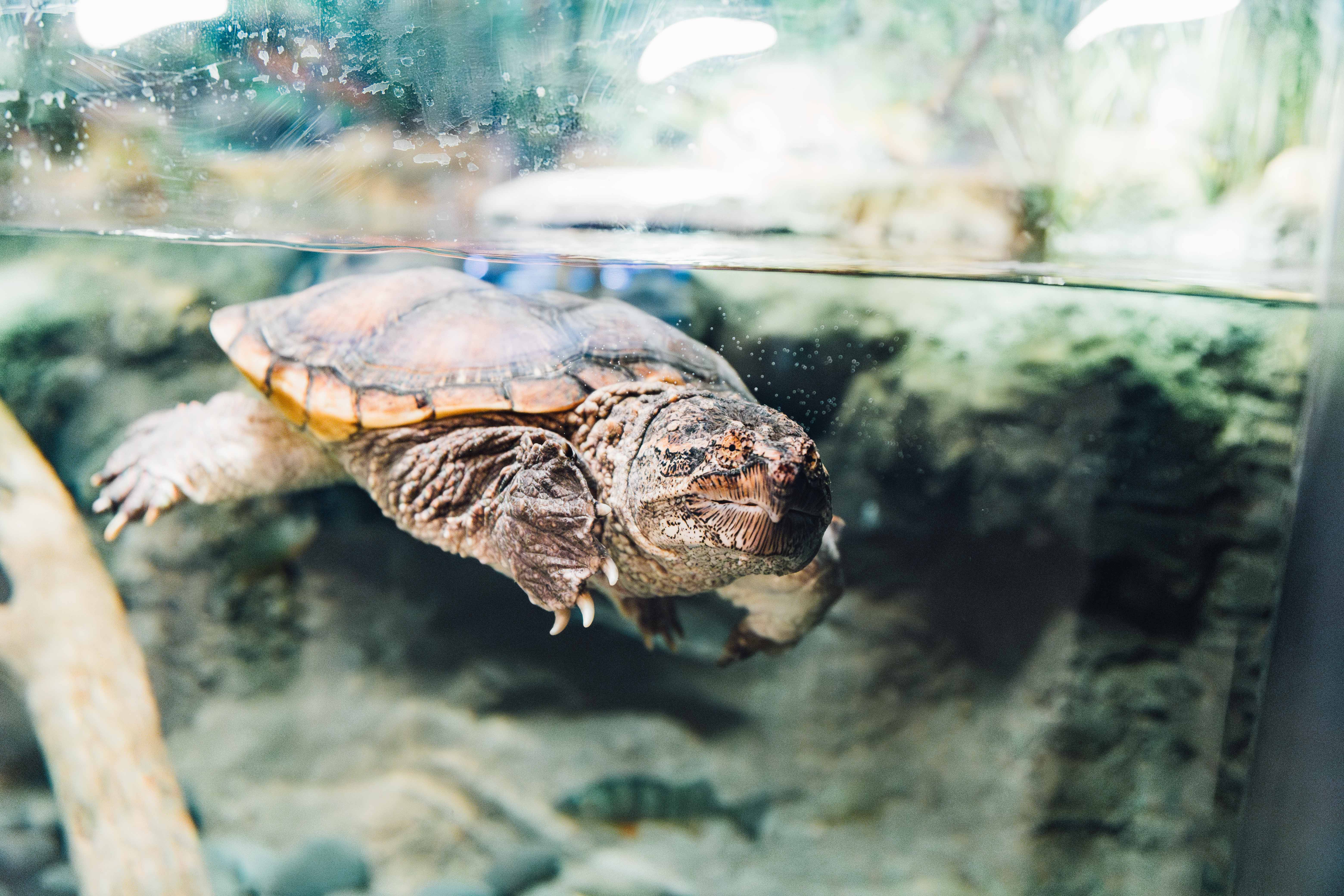
Habitats of the Bay Watershed
Narragansett Bay doesn’t exist in isolation—it’s fed by rivers, streams, and ponds stretching across Rhode Island and Massachusetts. The health of these freshwater habitats directly shapes the health of the Bay.
Sandy Bottom
The sandy bottom of the Bay is a mosaic of life. Flounder lie camouflaged against the sediment, whelks plow through the sand, and horseshoe crabs emerge each spring in one of nature’s most ancient rituals.


Bay at Night
As the sun sets over Narragansett Bay, a different cast of characters takes over. Bioluminescent plankton light the water, nocturnal fish emerge to feed, and the Bay’s nighttime rhythms reveal a world most visitors never see.
Bay of the Future
What will Narragansett Bay look like in 50 years? Rising temperatures, ocean acidification, and sea level rise are already reshaping the Bay’s habitats. The choices we make today will determine what survives—and what thrives—tomorrow.